

Structures
The Preferred Solution
PowerOn Midwest was approved by the Midcontinent Independent System Operator (MISO) as part of its long-range transmission planning portfolio—a set of projects designed to address growing demand, relieve congestion, integrate new sources of generation, and improve grid reliability across the region.
Why 765 kV technology?
765 kilovolt (kV) technology was identified in the planning process as the preferred solution for the region, presenting several advantages:
- Efficiently carries power over long distances
- Fewer transmission lines needed to carry the same amount of power (see diagram)
- Fewer structures reduce impact on land, communities, and the environment
- Resilient infrastructure that can consistently deliver power
- Provides backup power pathways to deliver energy to customers
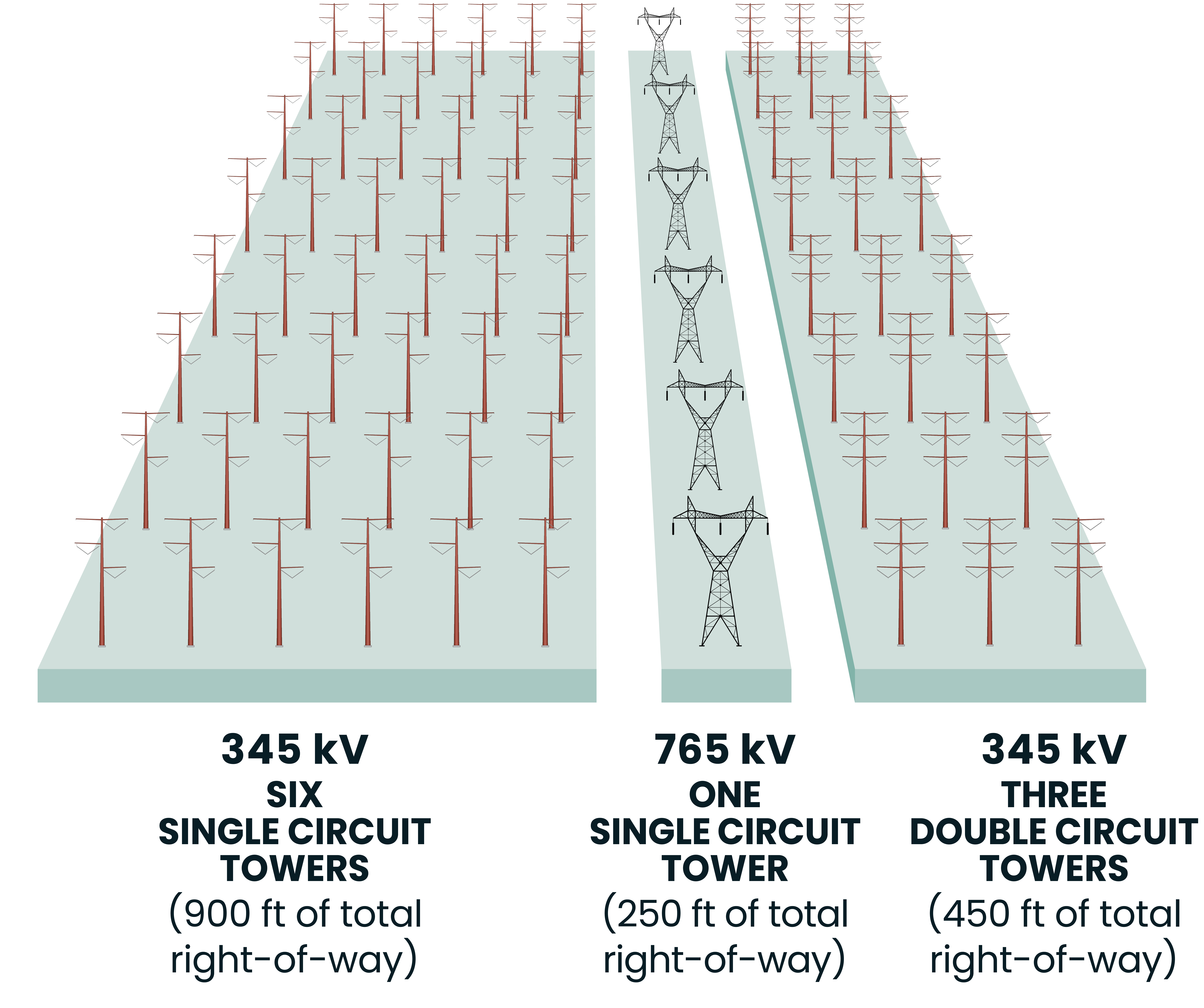
A 765 kV transmission line can carry as much power as six 345 kV single circuit lines or three 345 kV double circuit lines.
Not to scale*Structure types
Transmission structures play a vital role in the delivery of electricity. They support the components that are used to transport electricity. PowerOn Midwest is working with landowners and the community to power our region today and into the future.
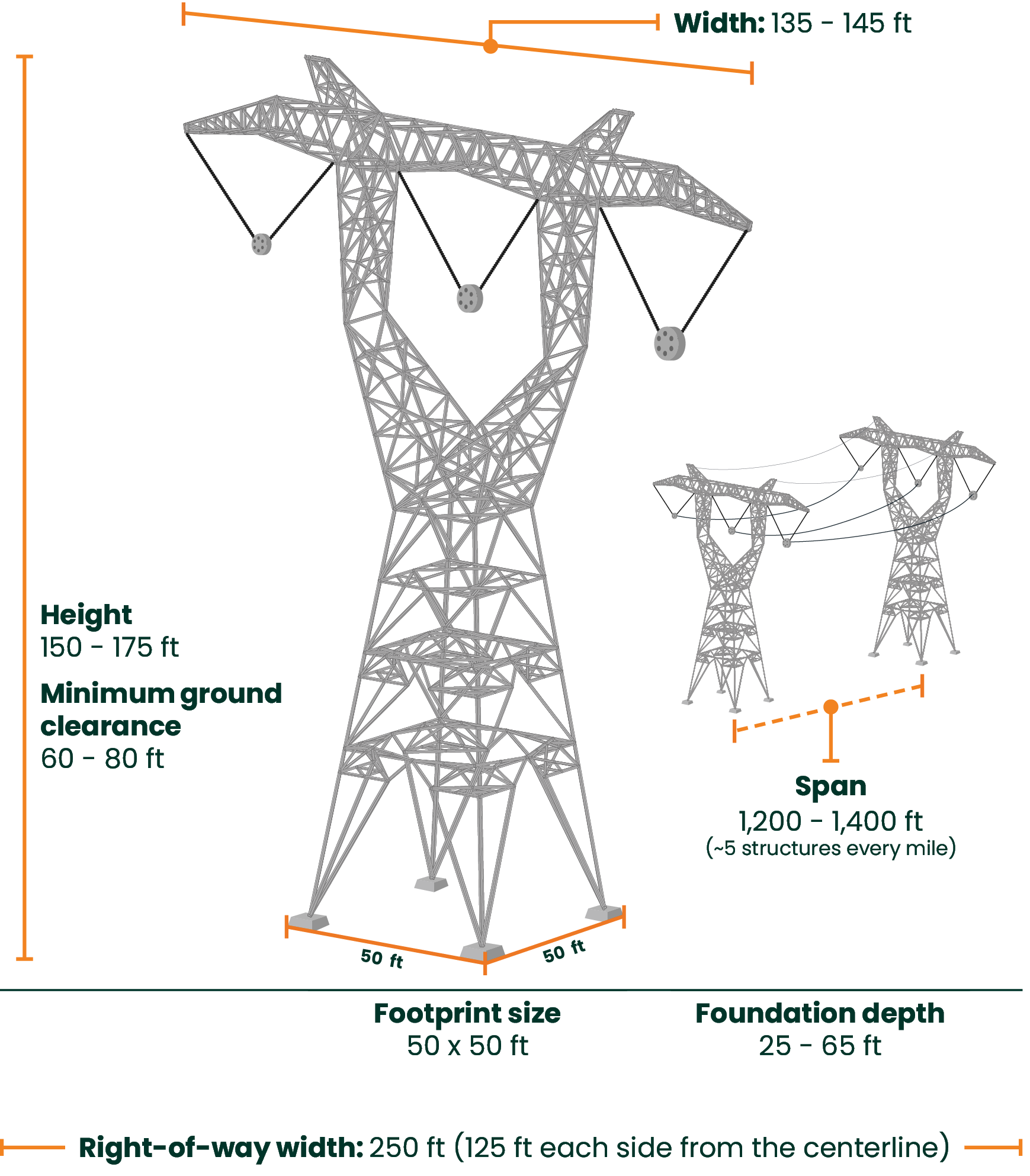
Typical 765 kV structures
This is an example of a typical 765 kV structure, similar to what could be used on the project.
Land rights overview
Land rights is the name used for the property rights acquired by the utility used for the construction, operation, and maintenance of a transmission line. Most often, the land rights acquired are easements. An easement allows the utilities the right to construct, operate, and maintain a transmission line and other associated infrastructure on a landowner's property.
Our land rights acquisition process
Project representatives will hold individual meetings with affected landowners to discuss land rights.
-
Utilities contact landowners to begin the easement discussion.
-
Easement process is discussed with landowners. An offer is based on current market values (similar properties) and other property specifics.
-
The utilities work closely with the landowner to resolve concerns and reach agreement. If unable to agree, state law provides for an eminent domain process.
-
The utilities construct, operate, and maintain the transmission line within the easement.


Stay Informed
Sign up for our mailing list to receive news and updates.